 |
Urlaubsplan
|
Lade ...
Suche ...
Keine Treffer
|
Urlaubsplan
|
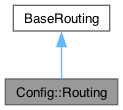
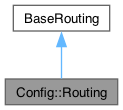
Öffentliche Attribute | |
| array | $routeFiles |
| string | $defaultNamespace = 'App\Controllers' |
| Controller in der Anwendung'. | |
| string | $defaultController = 'FrontendWebsite' |
| string | $defaultMethod = 'index' |
| bool | $translateURIDashes = false |
| string | $override404 = null |
| bool | $autoRoute = false |
| bool | $prioritize = false |
| bool | $multipleSegmentsOneParam = false |
| array | $moduleRoutes = [] |
| bool | $translateUriToCamelCase = false |
Routing configuration
| bool Config::Routing::$autoRoute = false |
If TRUE, the system will attempt to match the URI against Controllers by matching each segment against folders/files in APPPATH/Controllers, when a match wasn't found against defined routes.
If FALSE, will stop searching and do NO automatic routing.
| string Config::Routing::$defaultController = 'FrontendWebsite' |
For Auto Routing. The default controller to use when no other controller has been specified.
Default: 'Home'
| string Config::Routing::$defaultMethod = 'index' |
For Defined Routes and Auto Routing. The default method to call on the controller when no other method has been set in the route.
Default: 'index'
| string Config::Routing::$defaultNamespace = 'App\Controllers' |
| array Config::Routing::$moduleRoutes = [] |
| bool Config::Routing::$multipleSegmentsOneParam = false |
For Defined Routes. If TRUE, matched multiple URI segments will be passed as one parameter.
Default: false
| string Config::Routing::$override404 = null |
Sets the class/method that should be called if routing doesn't find a match. It can be the controller/method name like: Users::index
This setting is passed to the Router class and handled there.
If you want to use a closure, you will have to set it in the routes file by calling:
$routes->set404Override(function() { // Do something here });
Example: public $override404 = 'App\Errors::show404';
| bool Config::Routing::$prioritize = false |
For Defined Routes. If TRUE, will enable the use of the 'prioritize' option when defining routes.
Default: false
| array Config::Routing::$routeFiles |
| bool Config::Routing::$translateURIDashes = false |
For Auto Routing. Whether to translate dashes in URIs for controller/method to underscores. Primarily useful when using the auto-routing.
Default: false
| bool Config::Routing::$translateUriToCamelCase = false |
For Auto Routing (Improved). Whether to translate dashes in URIs for controller/method to CamelCase. E.g., blog-controller -> BlogController
If you enable this, $translateURIDashes is ignored.
Default: false
 1.12.0